A platform lead at a mid-size fund told me once that her bench of fractional CMOs had grown to eleven names, almost none of whom she'd personally vetted. Most had come in through a warm introduction from a founder, a partner's LinkedIn feed, or a conference hallway conversation. She trusted the bench existed. She had never actually tested it.
That's more common than most funds would admit. Portfolio support has become table stakes, and building a bench of vetted operators is the standard move, but the vetting itself often gets skipped in favor of just having names on the list. The bench feels like coverage. It isn't, until someone's actually run diligence on the people in it.
Worth saying directly, since I'm writing this as someone who could end up on that bench: every checklist below applies to me too. If a platform lead reads this and asks me the same four questions before making an introduction, that's the point. A vetting framework only means something if the person handing it to you would also survive it.
Why the vetting gap matters more than it used to
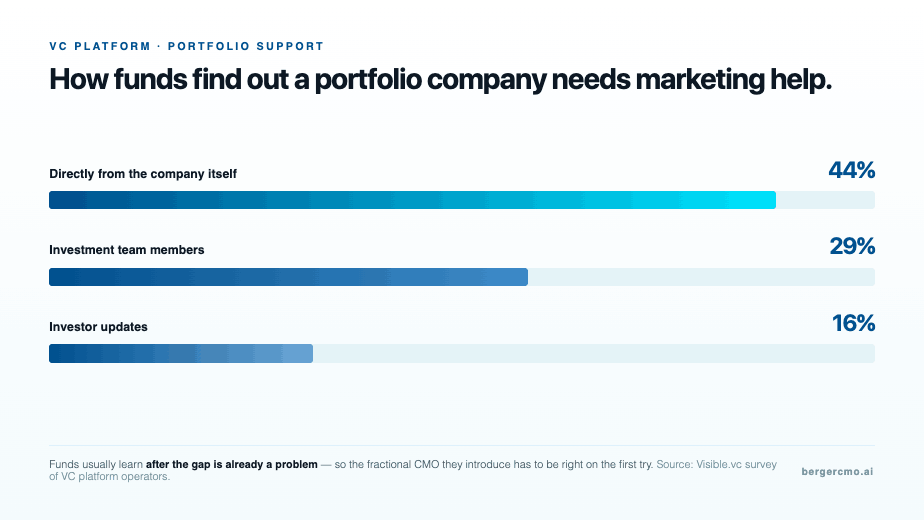
Portfolio support used to be reactive by design. Visible.vc's survey of VC platform operators found that the most common way funds learn a company needs help is directly from the company itself, 44% of the time, followed by investment team members at 29%, and investor updates in third place. In other words, most platform teams find out about a marketing gap after it's already a problem, which means the fractional CMO they introduce needs to be right on the first try. There's rarely time to test a second name.
The bar for what "vetted" means has also moved. Affinity's 2026 benchmark analysis found that the highest-performing firms made 16% more introductions year over year than their peers, and separately reported that 64% of investors now use AI to accelerate company research. Funds are getting faster and more systematic about diligence on deals. Most haven't applied that same rigor to the roster of operators they hand to their portfolio companies after the check clears. That's an inconsistency worth closing, because a bad fractional CMO introduction carries real downside: a wasted quarter, a founder who now distrusts the fund's judgment, and a portfolio company that's further behind than before the "help" arrived, not unlike the exposure an unsupervised marketing hire creates when nobody senior is checking the work.
What real vetting looks like versus what most funds do instead
Aaron Cort, who runs marketing and go-to-market for Craft Ventures' platform, has described the operating partner's diligence role as juggling three things at once: sourcing through their own network, serving as a functional expert who can give a real read on a company's chances, and representing the fund well enough that founders want to work with them. That third piece is where most bench-building goes wrong. Funds default to vetting for the third thing, polish, credibility, a good conversation, because it's the easiest to assess in a single meeting. The second thing, genuine functional judgment under pressure, requires actually checking someone's track record against outcomes, not against how confidently they describe their process.
A useful vetting checklist for a fractional CMO bench, drawn from where these engagements actually break:
-
Check 01Reference checks that ask about outcomes, not presenceDon't ask a past client whether the fractional CMO was responsive or easy to work with. Ask what specific number moved, over what timeframe, and how they know it was the CMO's work rather than something else happening at the company simultaneously. If the reference can't isolate an outcome, like the shift from an unreliable MQL count to a defensible SQL number, the engagement was probably advisory theater.
-
Check 02Client load and real bandwidthAsk directly how many other active engagements they're carrying and how many hours a week each one actually gets. A fractional CMO with six concurrent clients at ten hours a week each is not the same offering as one with two clients at real depth. Neither is wrong, but a fund's bench should know which model each name on the list is running, because it changes what that person can credibly promise a company in a crisis.
-
Check 03Vertical and stage specificity, not general credibilityA strong résumé at a recognizable company doesn't predict performance at Series A with a six-person buying committee and an eighteen-month sales cycle. Ask for a company that looked like the one being introduced, same stage, same motion, same rough ARR, and ask what they'd have done differently in hindsight. Generic confidence is easy. Specific hindsight is harder to fake.
-
Check 04Ownership versus adviceThe strategy-execution gap is the most common way a fractional engagement fails. Before adding someone to the bench, find out whether their model includes owning a metric directly, sitting inside the execution cadence, versus producing a strategy deck and stepping back. VC Lab's Venture Share framework for structuring venture partner compensation makes a similar distinction across roles: operating engagement is priced and evaluated differently from strategic advisory, precisely because the two create different value and carry different risk if they underdeliver.
None of these four questions require taking my word for anything. They require calling my references and asking what actually moved, which is exactly how this should work.
The bench is a diligence artifact, not a directory
A fund's bench of fractional executives is functionally an extension of its own judgment. Every time a name gets introduced, the fund is vouching for it.
The crystallizing insight: a fund's bench of fractional executives is functionally an extension of its own judgment, every time a name gets introduced, the fund is vouching for it. Treating the bench like a directory, names collected opportunistically and never re-tested, puts that judgment on the line without ever actually confirming it holds up.
Before the next fractional CMO name goes into a portfolio company's inbox, run the same checklist you'd want a founder to run before taking the meeting: what number did they move, how many other clients are competing for their time, have they done this exact stage and motion before, and do they own outcomes or just produce advice. If you can't answer those four questions about every name currently on your bench, the bench isn't vetted. It's just a list. Want to run this checklist against a specific name, including mine? Happy to give you the reference list to call.